
Last updated November 4, 2026
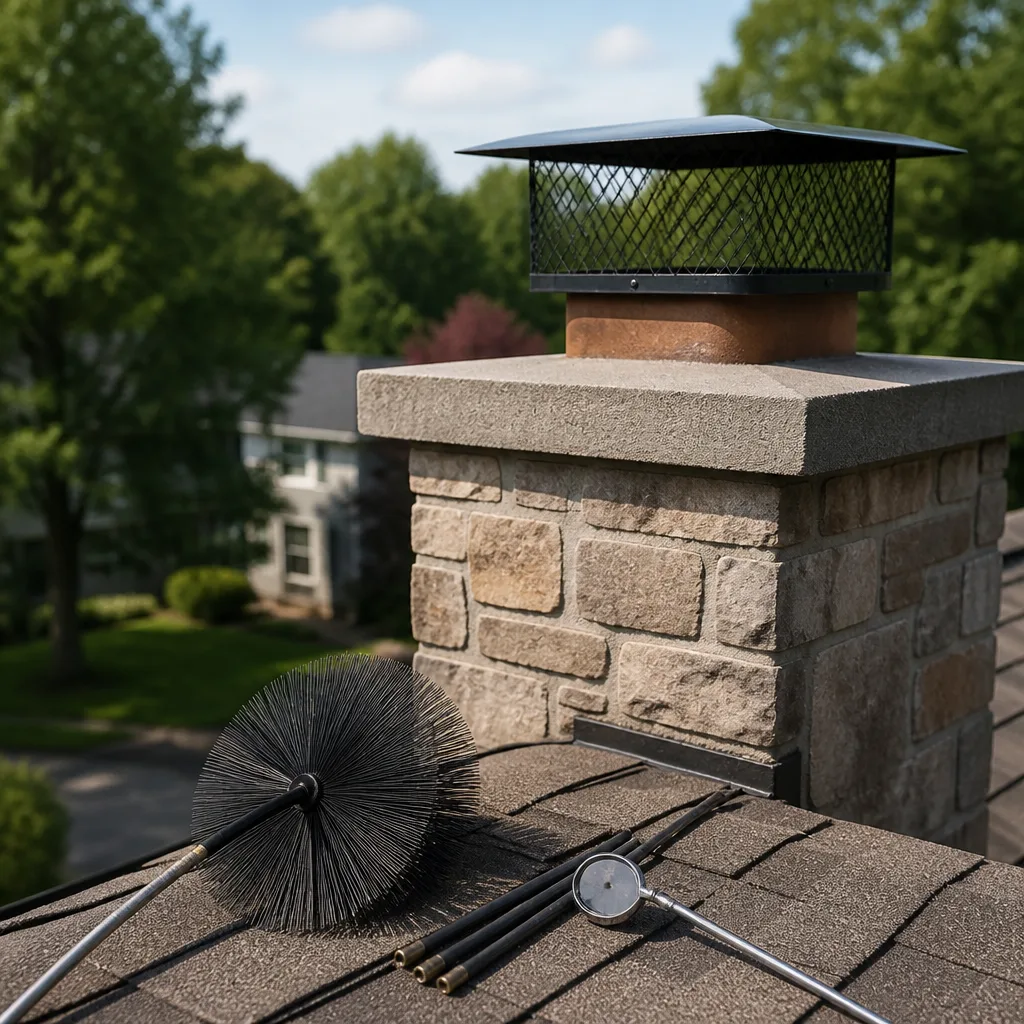 Sweep & inspection
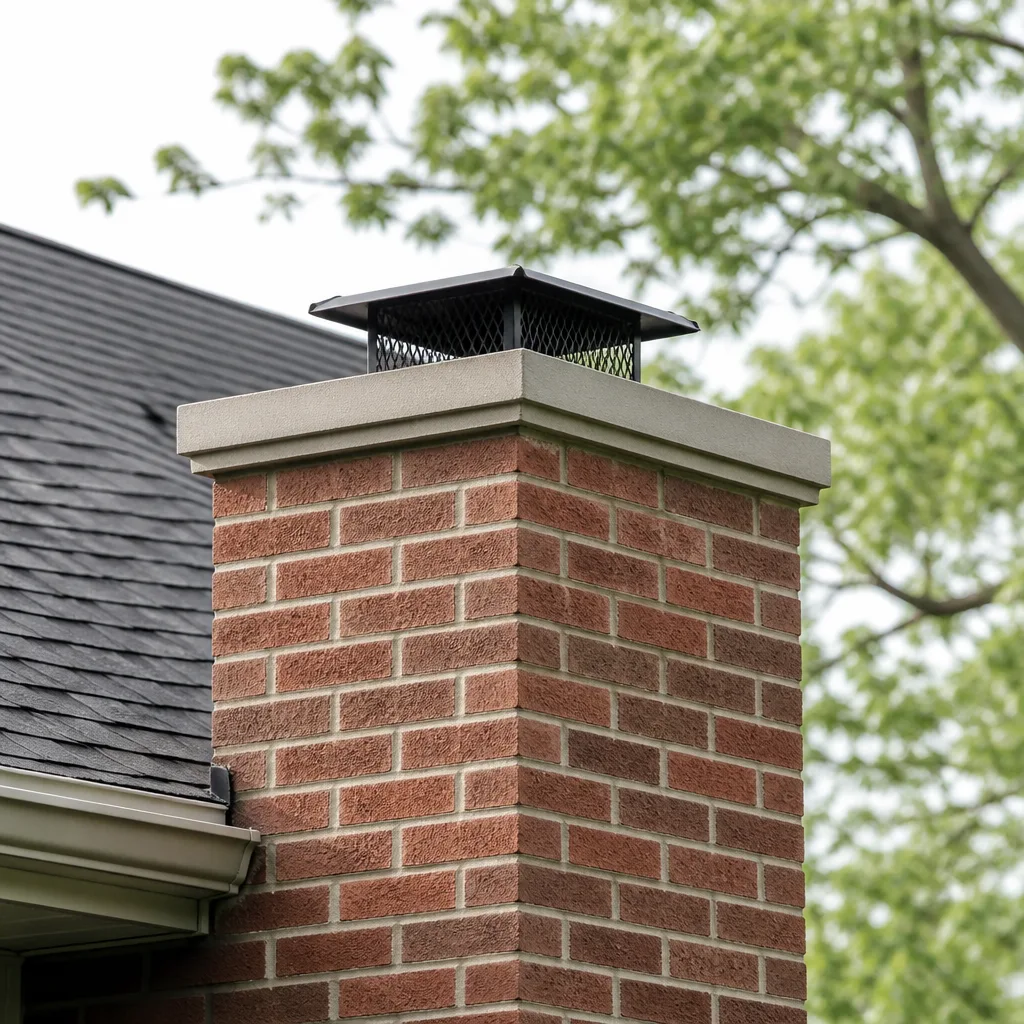 Caps & crowns
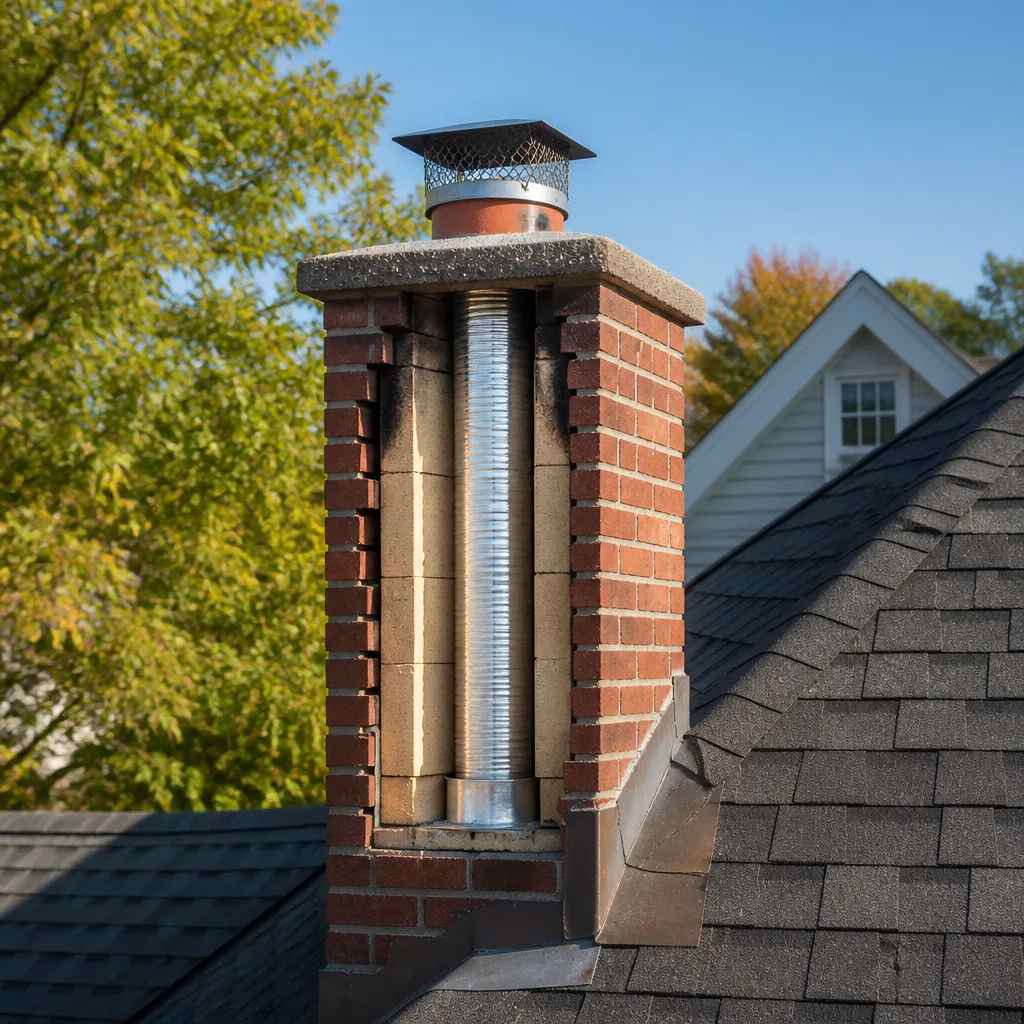 Flue relining
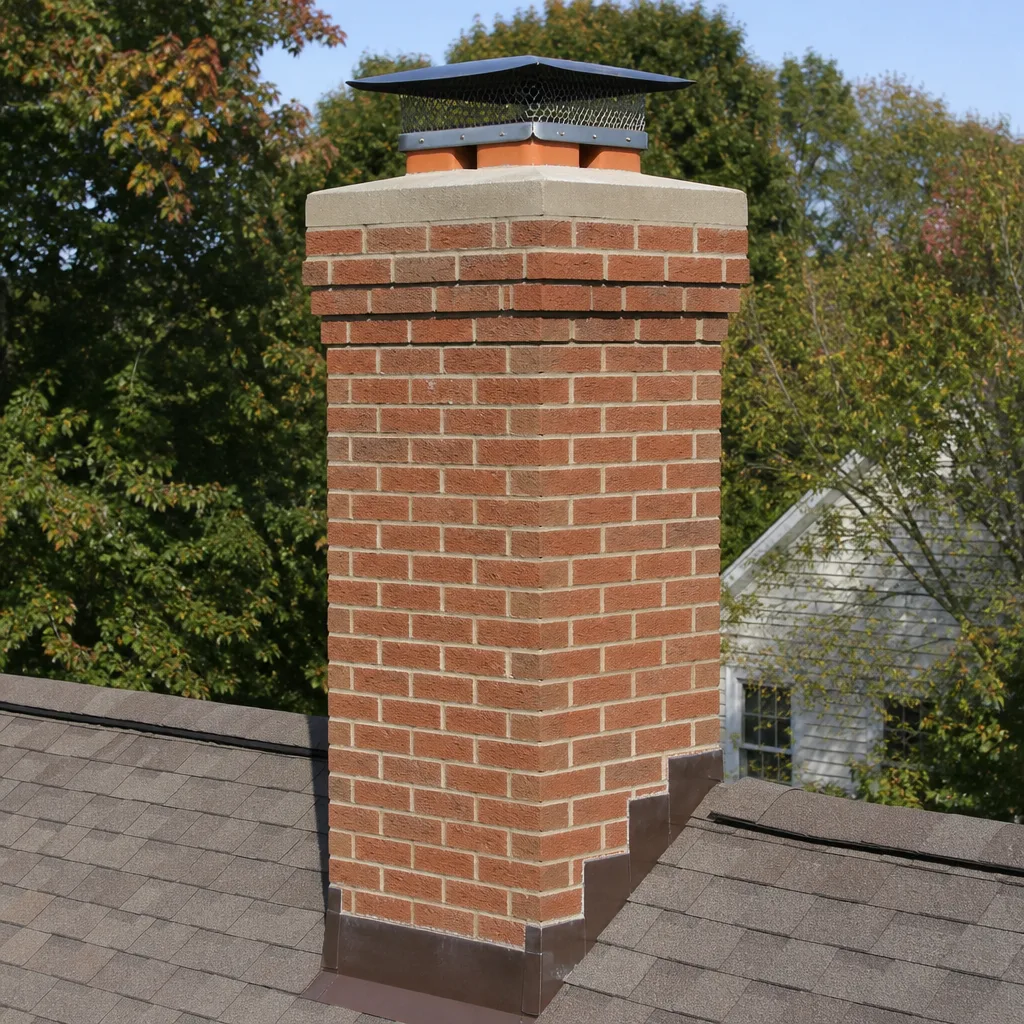 Masonry repair
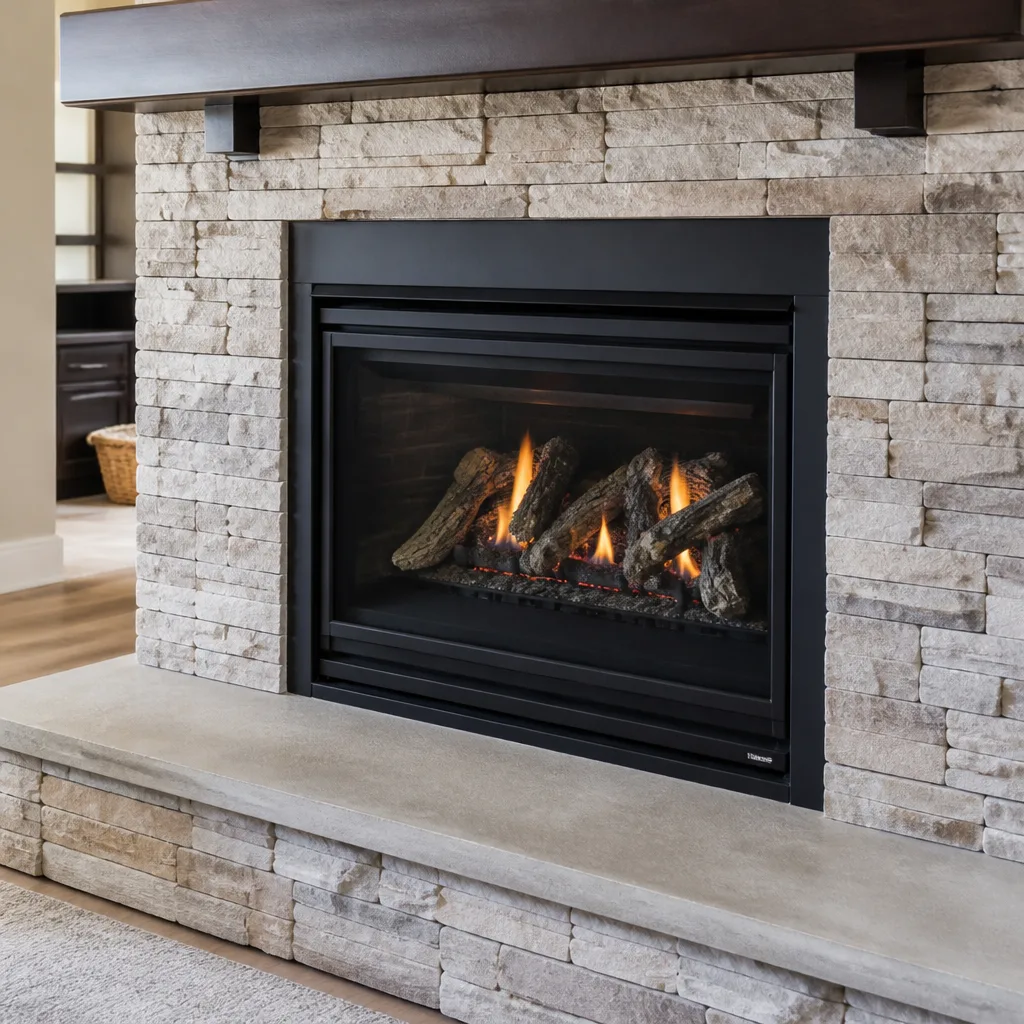 Gas fireplace service
Level 1 sweep and inspection to the NFPA 211 annual standard - flue, crown, cap, and flashing checked and photographed
Chimney sweep logs do not sweep chimneys. They loosen some creosote - which then falls where a brush and vacuum still have to collect it.
Seasonal Chimney Cleaning Care for Bellflower: Year-Round Homeowner’s Guide
Most chimney maintenance advice is written for places with hard winters, where the annual cycle is simple: burn all winter, clean in spring, wait for snow to melt. Bellflower does not work that way. Our mild climate means fireplaces sit idle for months at a time, and that dormancy creates its own set of problems that homeowners rarely see coming. This guide walks through what actually happens inside a Bellflower chimney across the calendar year, when to schedule service, and which tasks matter more than others. You will learn why the window between late September and early November matters so much, what moves into an unused flue between March and November, and how to think about maintenance for wood-burning versus gas systems.
Quick Answer
The ideal time for seasonal chimney cleaning in Bellflower is late September through early November, before the first wood fire of the year. During Southern California’s long off-season, unused flues accumulate pest nests, spider webs, and moisture-related damage that a pre-burn sweep addresses in one visit. Schedule a sweep and inspection annually, even if you only burn occasionally, because creosote deposits form faster in draft-restricted flues than most homeowners expect.
Styles & brands we work with
- Sweep & inspection
- Caps & crowns
- Flue relining
- Masonry repair
- Gas fireplace service
Table of Contents
- What “Off-Season” Really Means for a Bellflower Chimney
- The Optimal Pre-Burn Window: Late September to Early November
- Spring Tasks: Post-Burn Creosote Assessment
- Summer Tasks: Caps, Crowns, and Earthquake-Shifted Masonry
- How Gas Fireplace Seasonal Care Differs
- Why Dryer Vents Follow a Different Calendar
- Signs Your Chimney Needs Attention Before Burning Season
- What a Seasonal Chimney Service Actually Includes
What “Off-Season” Really Means for a Bellflower Chimney
In Bellflower, the period between March and November is not a true off-season for your chimney. It is a season of vacancy, and vacancy invites problems. A flue that sits unused for eight months becomes an attractive shelter for birds, rodents, and insects. We routinely find bird nests wedged against flue tiles, spider webs dense enough to restrict airflow at the cap, and the fine debris that accumulates when small animals move through. None of these are visible from the living room, and all of them reduce draft or introduce combustible material into the path of hot exhaust gases.
Moisture behaves differently here than in colder climates. Bellflower’s marine layer brings morning condensation during late spring and early summer, and that moisture settles inside unlined or damaged flues. Over repeated cycles, condensation absorbs into masonry and accelerates deterioration of mortar joints. A chimney that was structurally sound at the end of burning season can show spalling bricks or eroded mortar by October. This is why we tell Bellflower homeowners that skipping a year is not a neutral decision. The chimney changes while it sits unused.
There is also the pest factor at the terminations. Chimney caps with damaged screening let wasps, mud daubers, and spiders build nests directly in the flue opening. These nests dry out over summer and become kindling sitting above your fireplace. A pre-season inspection catches this before the first match is struck.
The Optimal Pre-Burn Window: Late September to Early November
The first genuinely cool evening in Bellflower usually arrives in October, and that is when most homeowners think about their fireplace for the first time since spring. The problem is that by mid-November, every chimney professional in the region is booked. Waiting until the fireplace is actually needed means competing for appointment slots at the exact moment when demand peaks. A homeowner who waits until December is competing for appointments while the entire region discovers its chimney problem on the first cold stretch, and has less flexibility if the inspection finds something that needs repair before the system is safe to use.
The smarter approach is to book a chimney sweep between late September and early November. During this window, the weather is dry, the flue has fully aired out from any spring moisture, and there is still time to complete repairs before the holidays. Our technicians at Chimney Sweep Bellflower recommend this window because it aligns with how Southern California actually burns: short, occasional fires rather than daily heating loads. A flue that is cleaned and inspected in early October is ready the first night the temperature dips.
What does a pre-burn service include? The sweep removes creosote, soot, and any pest debris from the flue walls and smoke chamber. The technician checks the cap, crown, damper, and visible masonry. If camera inspection is warranted, we can document the interior condition before recommending any repair. This is the moment when deferred issues from the previous season get addressed, not in December when the fireplace is already in use.
Spring Tasks: Post-Burn Creosote Assessment
After the last fire of the season, usually February or March in Bellflower, most homeowners close the damper and do not think about the chimney again until fall. That is understandable, but it misses an important window for assessment. Creosote does not disappear when the fire goes out. It sits on flue walls, and its composition determines what happens next.
Stage 1 creosote is a fine, flaky soot that brushes away easily. Stage 2 is a thicker, tar-like deposit that forms when smoke cools too quickly in the flue, often because of restricted draft, oversized flues, or burning unseasoned wood. Stage 3 is a hardened, glazed coating that is difficult to remove and presents a genuine fire hazard. In our experience, even a handful of cord-fires in a draft-restricted Bellflower flue can produce Stage 2 deposits that surprise the homeowner. The mild climate means chimneys are built for occasional use, and that occasional use sometimes means less efficient burns and more residue per fire than a heavily used system in a colder climate.
A spring assessment, even a visual one, tells you what you are facing. If the deposits are light, you can plan a standard pre-burn sweep in the fall. If they are heavy, you have months to schedule a more involved cleaning rather than discovering the problem on the first cold evening of the season. Spring is also the right time to note any performance issues from the past winter: smoky startups, odors, or a damper that was difficult to operate. These details help a technician diagnose problems before the next burn cycle.
Summer Tasks: Caps, Crowns, and Earthquake-Shifted Masonry
Summer is the season of exposure in Bellflower. The flue is not in use, and that is exactly when environmental factors do their work. Three areas deserve homeowner attention between June and September, and each is a known failure point in Southern California chimneys.
First, inspect the chimney cap. The cap keeps rain, birds, and debris out of the flue. Its screening also keeps embers from escaping during a fire. Over time, screens rust, welds fail, and animals work at the edges. A cap with a visible hole or separated screen is no longer doing its job. Given the marine-layer moisture in Bellflower springs, rust develops faster than homeowners expect, even on galvanized components.
Second, check the crown. The crown is the concrete or mortar surface that seals the top of the chimney structure around the flue. Hairline cracks let water into the masonry below, and in a climate that cycles between damp mornings and dry afternoons, those cracks expand. A crown that is crumbling accelerates damage to the entire upper chimney. This is a repair we handle with materials from Olympia Chimney, chosen for the way they hold up under repeated wet-dry cycles.
Third, give the chimney a visual once-over from ground level. Bellflower is in an active seismic zone, and even minor shifting can open mortar joints, displace caps, or separate the chimney from the house framing. Hairline vertical cracks that appeared after a quake are worth a professional look. Vegetation growing from the crown or between bricks indicates that moisture and organic material have already gained a foothold. All of these are easier to address in summer, when the weather is predictable and crews have scheduling flexibility.
How Gas Fireplace Seasonal Care Differs
A gas fireplace does not burn wood, so it does not produce creosote. That single fact leads many Bellflower homeowners to assume their system needs no seasonal care at all. The reality is more nuanced. Gas systems still vent combustion byproducts through the flue, and those byproducts interact with the chimney in ways that affect safety and performance.
Gas combustion produces water vapor and acidic condensate. In a properly sized, properly vented system, most of that moisture exits the flue. In an older home, or one where the fireplace was converted from wood without resizing the flue, condensate sits on flue walls and eats away at mortar and clay tile. We have opened flues in Bellflower that looked fine from the cap and were degrading badly at the smoke chamber. The absence of creosote does not mean the absence of damage.
Seasonal care for a gas system should include an annual inspection that verifies the damper is positioned correctly, the flue is clear of debris, and no spalling or erosion has occurred. We also check that the gas log set is burning cleanly. A yellow, lazy flame indicates incomplete combustion, which can deposit soot and produce carbon monoxide. Homeowners with gas fireplaces should treat the pre-burn window of September to November the same way wood-burning households do: one inspection per year, before the system is used heavily. The difference is that a gas system may not need sweeping every year, but it always needs eyes on it.
If you have a gas insert inside an existing masonry chimney, the rules shift again. Inserts rely on a properly sized liner, and gaps in that liner or connections that have come loose allow exhaust into the chimney cavity. We work with Gelco and Olympia Chimney components for these systems, and the inspection focuses on connections as much as the flue itself.
Why Dryer Vents Follow a Different Calendar
Chimney seasons follow the weather. Dryer vents follow the laundry room, and that means they need attention on a schedule unrelated to the fireplace. Lint builds up in the vent run with every load, and in a climate like Bellflower’s, the warm, damp air from the dryer creates a cycle of accumulation that is surprisingly efficient. The dryer runs harder to push air through a restricted vent, and the lint that does not make it out sits as a combustible layer waiting for a spark.
The National Fire Protection Association has identified lint accumulation as the leading cause of home dryer fires. That is a fire safety issue, and it is why we offer dryer vent cleaning as a core service alongside chimney sweeping. Homeowners often ask how frequently the vent should be cleaned. The answer depends on household size and usage, but a good rule is once a year for a family that does daily laundry. The vent clogs gradually, so the first sign is usually longer drying times or a dryer that feels hot to the touch. Both mean the system is working harder than it should.
Unlike chimney sweeping, which clusters in the fall, dryer vent cleaning spreads across the year. That makes it easier to schedule, but it also means the risk persists without a seasonal reminder. We recommend picking a season and sticking to it: the month you change smoke detector batteries, your birthday month, or the anniversary of moving in. The point is that the vent should be cleaned before performance degrades, not after.
Signs Your Chimney Needs Attention Before Burning Season
A chimney rarely fails without warning. Most problems show up as small signs that homeowners learn to ignore because the fireplace still works. Here are the specific indicators we tell Bellflower homeowners to watch for in the weeks before they intend to burn:
- Visible soot or creosote falling into the firebox. Fine black flakes appearing without a fire is often a sign that deposits on the flue wall are drying and sloughing off. That is material you do not want igniting mid-season.
- Dampness or odor when the damper is open. A musty or acrid smell from the fireplace in August or September suggests moisture intrusion or organic debris inside the flue.
- Slow or smoky startup on the first fire. If the first fire of October sends smoke into the room instead of up the flue, the draft is restricted. Common culprits include nests, collapsed flue tiles, or a saturated chimney structure.
- Audible animal activity. Scratching, rustling, or bird calls from the fireplace are not “just the house settling.” Something is in the flue, and it needs to be removed safely.
- Visible cracks or stains on the exterior chimney. White staining, moss, or new cracks on the exposed masonry all indicate moisture penetrating the structure. In a seismically active area like Bellflower, new cracks deserve baseline documentation even if they turn out to be cosmetic.
- Gaps around the damper or a damper that will not fully close. A damper that leaks lets conditioned air escape all summer and allows hot attic air to draft into the house during heat waves.
None of these signs mean the fireplace cannot be used, but several of them mean it should not be used until a professional has looked. The distinction matters when you are trying to plan a season of fires.
What a Seasonal Chimney Service Actually Includes
A proper seasonal service is more than running a brush up the flue. Here is what we do on a standard pre-burn appointment, and why each step matters:
- Interior protection and setup. Drop cloths and equipment are staged to keep soot and debris out of the living space. The fireplace opening is sealed before work begins.
- Flue inspection. We assess the condition of the flue from top to bottom, looking for cracks, gaps, animal intrusion, and the type and thickness of any creosote present. This determines tools and approach.
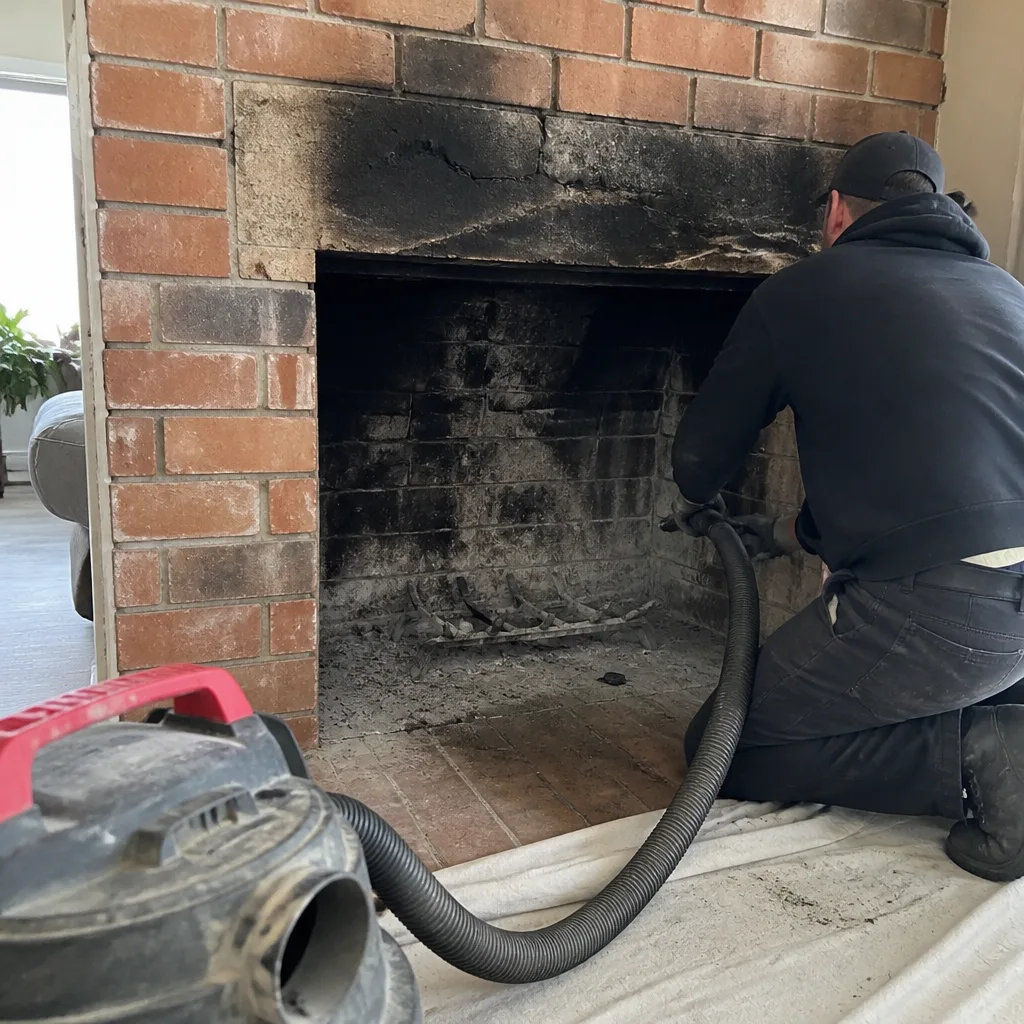
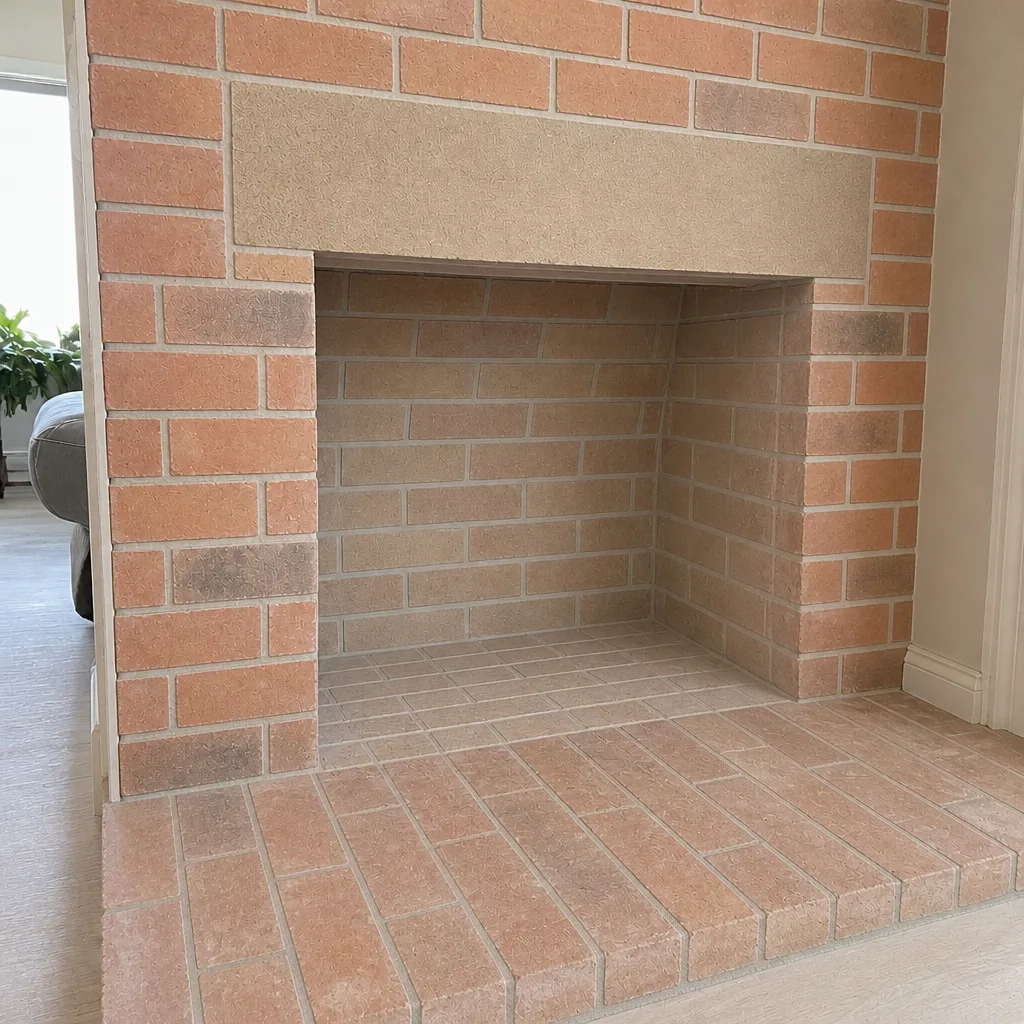
- Mechanical or manual sweeping. The flue, smoke chamber, and damper area are cleaned using brushes sized to the flue. The goal is to remove all combustible deposits down to the masonry surface where safe to do so.
- Cap, crown, and chase inspection. The technician examines the top of the chimney for damage, missing components, or deteriorated sealant. This is where most Southern California moisture problems begin.
- Camera inspection when warranted. If the technician sees conditions that suggest hidden damage, a camera run gives both the technician and the homeowner a clear view. We do not recommend liner work without this documentation.
- Written condition report. You get a summary of what was found, what was cleaned, and what, if anything, needs monitoring or repair. This is the document to keep if you later need to compare year-over-year changes.
The entire appointment is designed to leave you with a fireplace that is safe to use the same evening. We work with professional-grade products from HeatShield, Gelco, Olympia Chimney, and Famco when repairs are part of the job. That matters because a repair that fails in two years is not a repair; it is a delay. The materials we specify are the same ones used across the professional chimney trade, not homeowner-grade substitutes.
Common Mistakes to Avoid
- Waiting until December to schedule. The first cold stretch of the season is when every chimney in the region gets its annual attention, and service slots fill. Book in October and you have room to address findings before the holidays.
- Assuming no fires means no maintenance. An unused chimney still accumulates debris, moisture, and pests. The fact that you did not burn does not mean the flue is clean.
- Burning unseasoned wood to save money. Wet wood smolders, produces heavy smoke, and deposits creosote far faster than dry wood. The savings disappear the moment you need a heavier cleaning or a liner repair.
- Ignoring a damper that will not close fully. An open damper leaks conditioned air all summer and drafts odors into the house. In Bellflower’s hot spells, that is a comfort and efficiency problem.
- Treating gas and wood chimneys as the same. Gas systems have condensate issues temperature clay liners face. Wood systems have creosote. The inspection priorities differ even though the scheduling season is the same.
- Putting off a known repair because the fire still lights. A crack in the crown or a loose cap does not stop the fireplace from working, so it gets deferred. By the time it affects performance, the repair is larger than it needed to be.
- Forgetting the dryer vent. The chimney gets annual attention while the dryer vent runs hot and clogged for years. The fire risk there is just as real and far more common in daily household operation.
See the difference
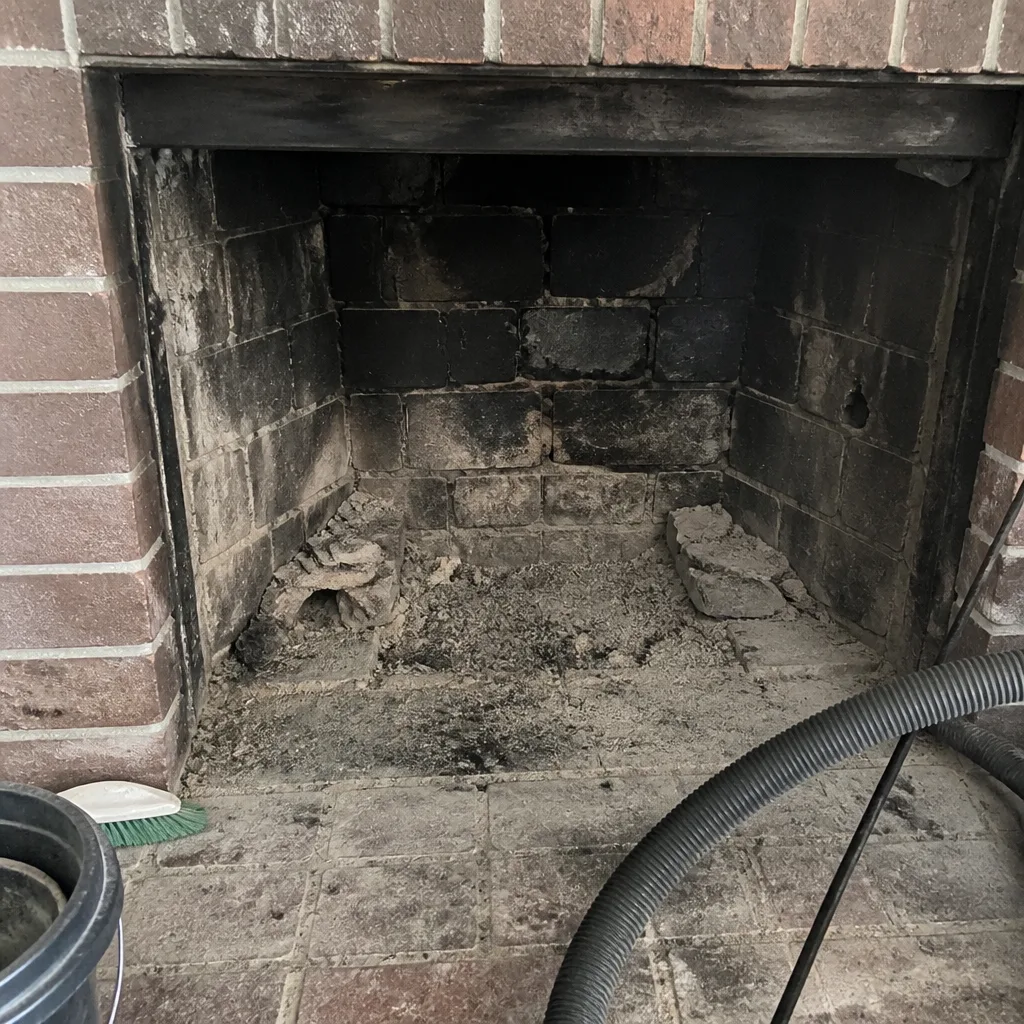 Before
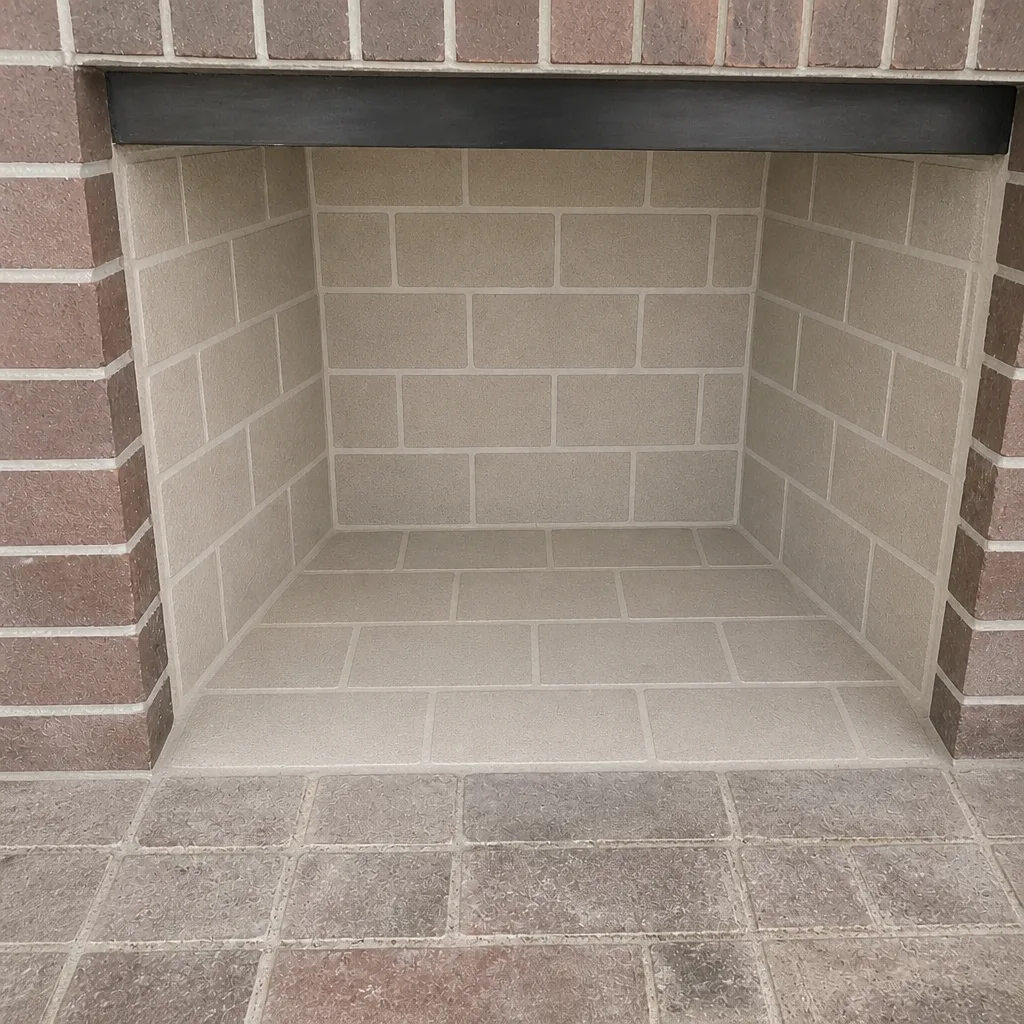 After
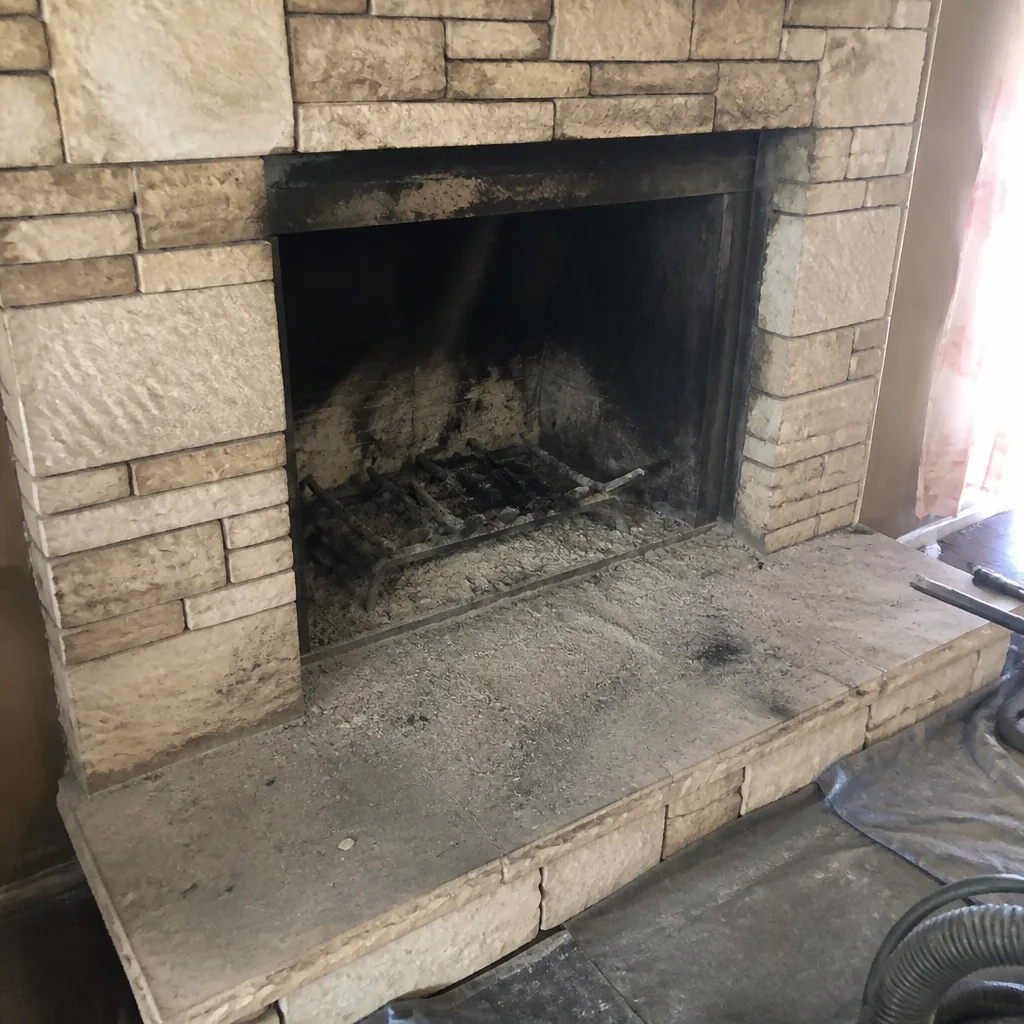 Before
 After
 Before
 After
When to Call a Professional
Call a professional if you see flaking creosote, smell persistent odors from the fireplace, hear animals in the flue, notice new cracks after seismic activity, or have not had the system inspected in more than a year. The safety threshold is low: if you are unsure whether the chimney is safe to burn, do not burn. A professional can assess the system, clean what needs cleaning, and document what needs documenting. Chimney Sweep Bellflower offers free estimates in Bellflower. Call (866) 632-0270. We answer 24/7. Fast dispatch from 7am to 7pm, Sunday through Friday.
Frequently Asked Questions
A chimney should be swept at least once a year if you burn wood, even occasionally. Bellflower’s mild climate means most homeowners burn only a few dozen fires per season, but those fires in a draft-restricted flue can produce heavier creosote than expected. Schedule the sweep in the pre-burn window of September to November so the system is clean before the first fire. Call (866) 632-0270 for an exact quote, estimates are free.
Gas fireplaces need an annual inspection even though they do not produce creosote. The flue handles acidic condensate and water vapor that degrades masonry over time, and a poorly burning gas log set can deposit soot and produce carbon monoxide. The timing is the same as wood systems: inspect before the season of heaviest use. Call (866) 632-0270 to schedule an inspection, estimates are free.
If you skip a year, the flue accumulates whatever the off-season left behind: creosote from the previous burn season, pest nests, debris, and moisture damage. The risk is that you will discover the problem on the first cold evening when the system is already compromised. A chimney that was safe last spring may not be safe this fall. Call (866) 632-0270 to get your system checked, estimates are free.
We do not recommend it. Proper sweeping requires tools sized to your flue, access to the roof in safe conditions, and the experience to recognize damage that a brush alone will not fix. A homeowner with a store-bought brush may remove some soot and leave the Stage 3 deposits and structural damage behind. That is a false sense of security, and it costs more to correct than an annual professional sweep would have.
A chimney that smells during Bellflower’s warm months is usually reacting to humidity and organic material inside the flue. Creosote, bird nests, and built-up soot all release odor when the air is damp, and the smell drafts into the house through an open damper or gaps around it. A seasonal sweep removes the source, and a proper cap prevents new material from entering. Call (866) 632-0270 to address the odor, estimates are free.
A cracked crown is a problem in any climate because the crown is the barrier that keeps water out of the masonry below. In Bellflower, the marine layer delivers repeated moisture cycles that widen small cracks over time. Water enters, the masonry absorbs it, and the damage compounds through the summer even though it never freezes. Repairing a crown is far less expensive than rebuilding a chimney.
The Bottom Line
Bellflower’s climate changes the chimney care calendar in ways most national advice misses. The risk is not harsh winter conditions. The risk is vacancy, moisture, and the false assumption that a mild climate forgives neglect. Sweep before the burn season, inspect after it, and keep an eye on caps, crowns, and masonry through the summer. Gas systems, wood systems, and dryer vents each need their own attention interval, and none should be deferred because the house feels fine. Schedule the pre-burn sweep in late September to early November, and you will burn with confidence all winter.
Written by the team at Chimney Sweep Bellflower, serving Bellflower since 2017.