
Last updated November 4, 2026
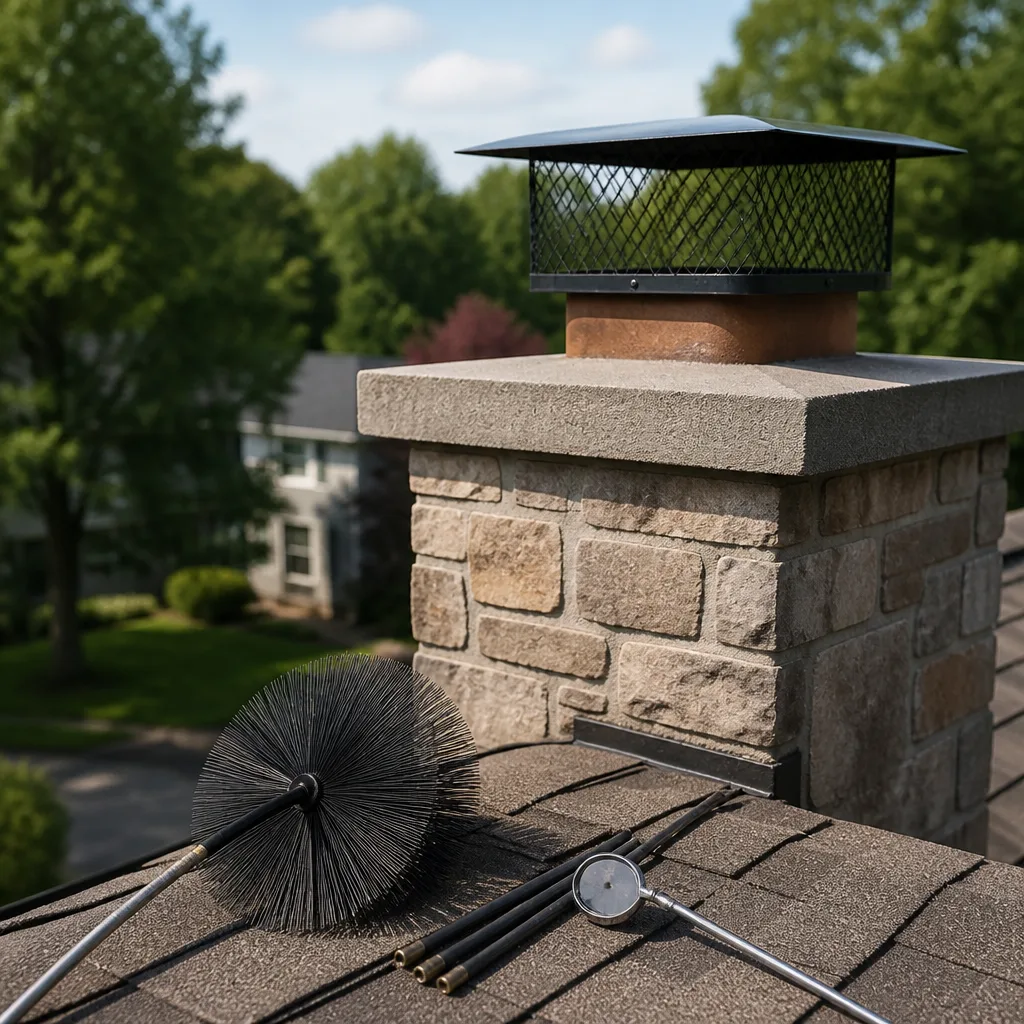 Sweep & inspection
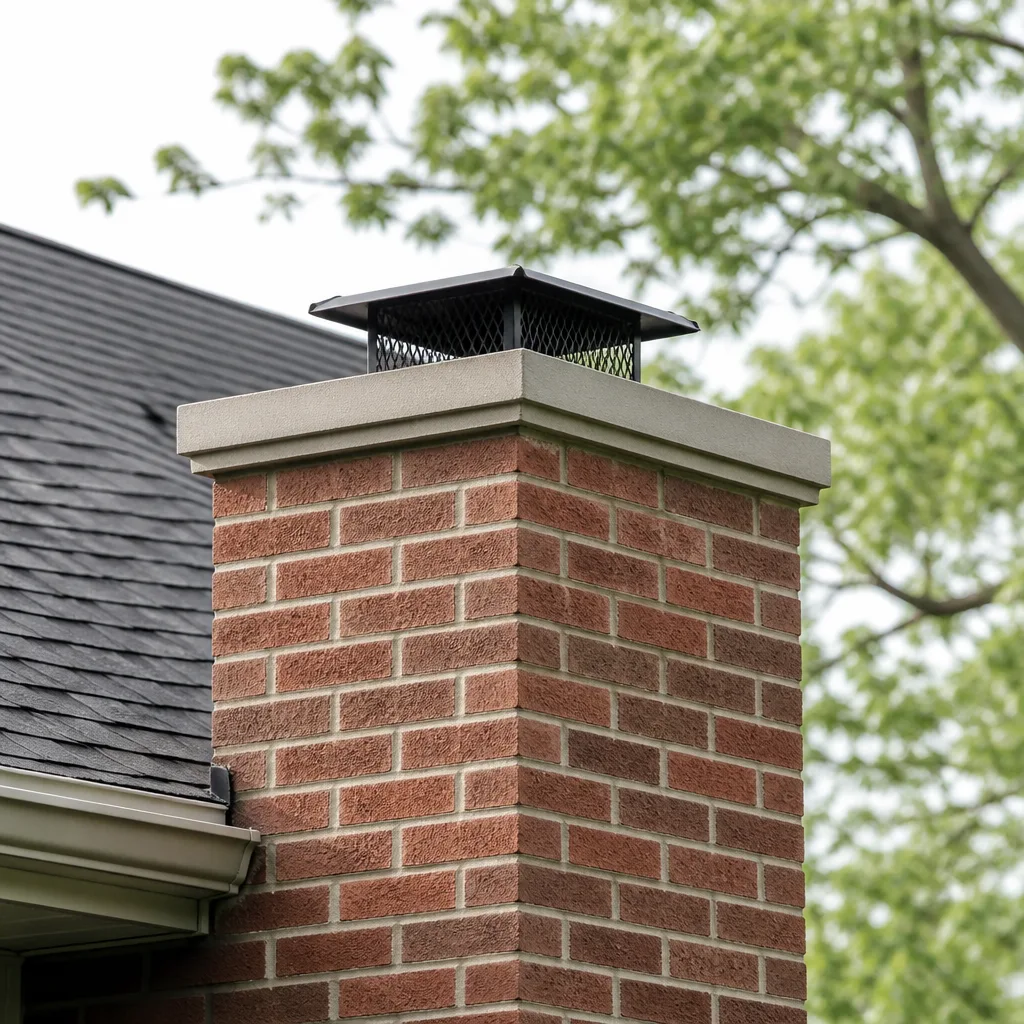 Caps & crowns
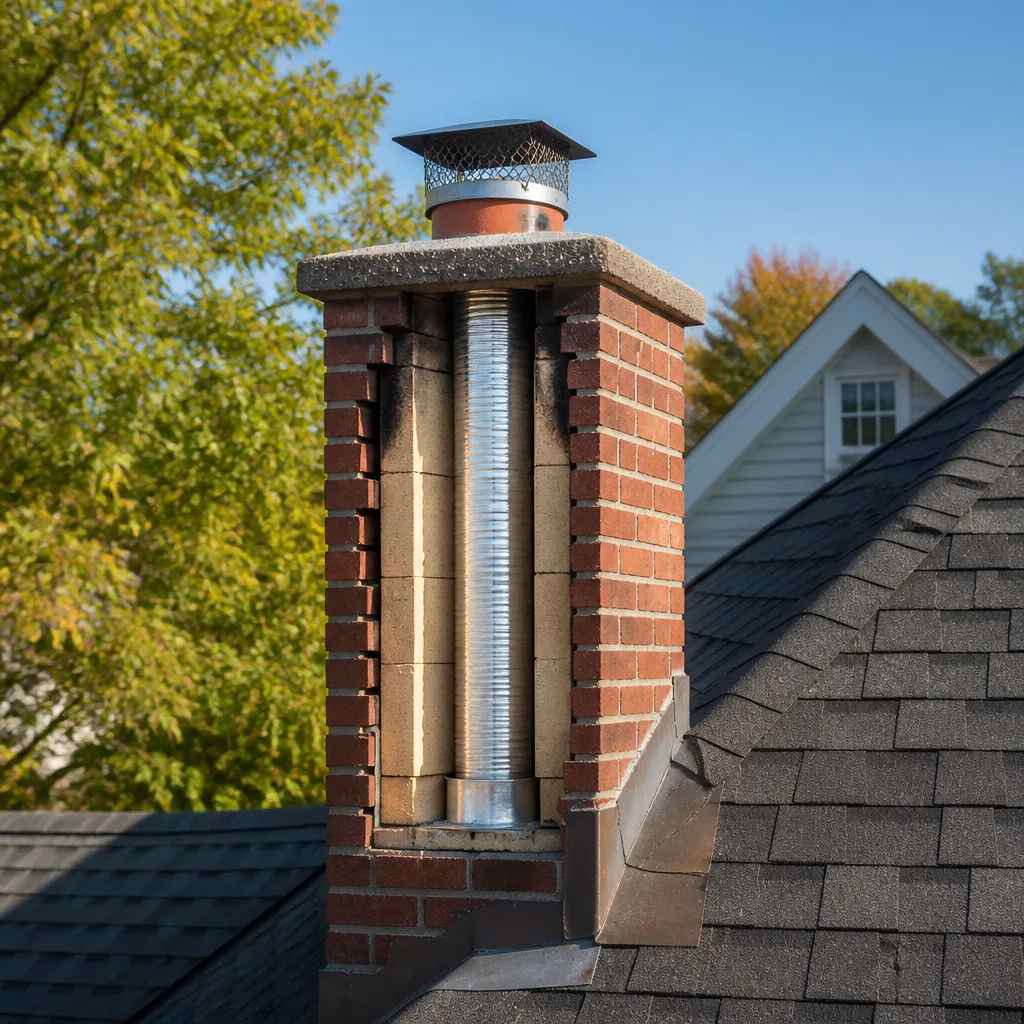 Flue relining
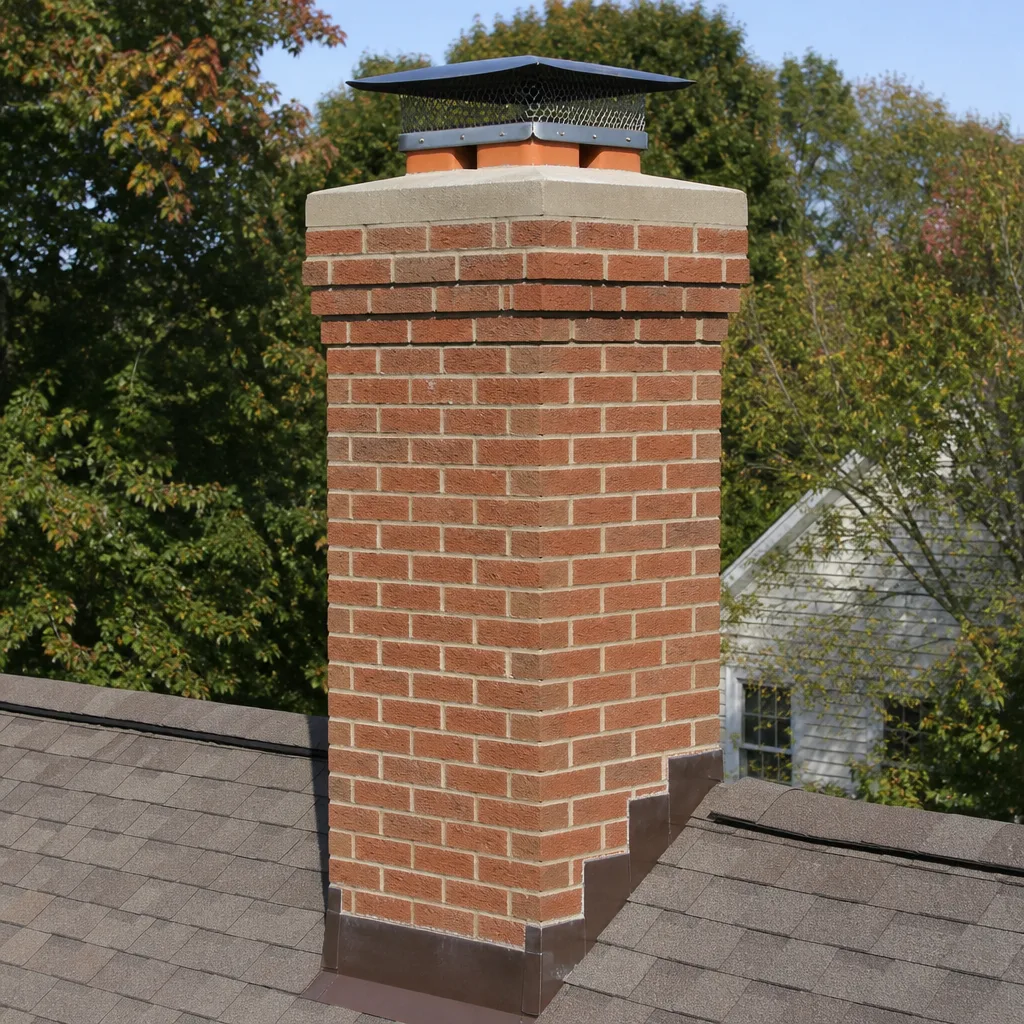 Masonry repair
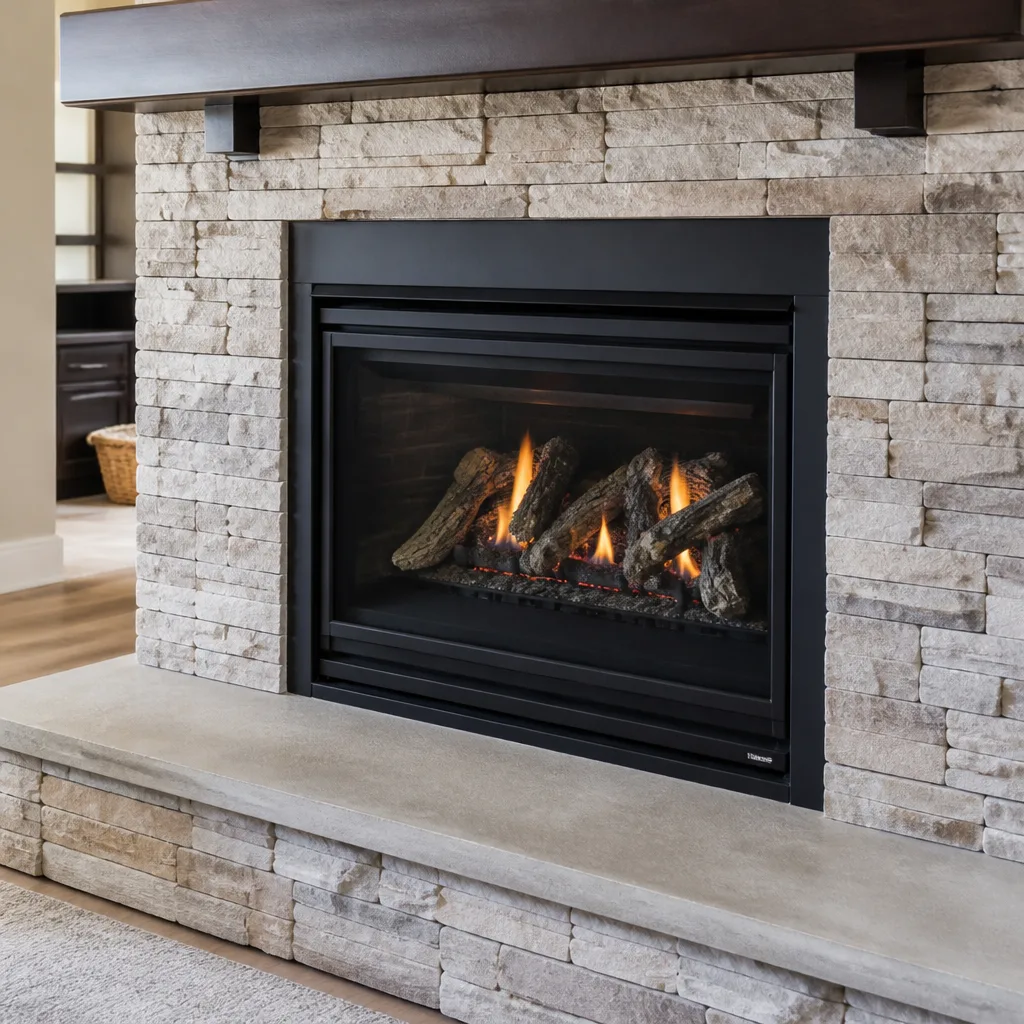 Gas fireplace service
Level 1 sweep and inspection to the NFPA 211 annual standard - flue, crown, cap, and flashing checked and photographed
Chimney sweep logs do not sweep chimneys. They loosen some creosote - which then falls where a brush and vacuum still have to collect it.
Chimney Cleaning Emergency Preparedness Guide for Bellflower Homes
A chimney fire is not a slow event. It can reach temperatures above 2,000°F, and the difference between a contained flue fire and a house fire is often measured in the minutes it takes a homeowner to recognize what is happening and act correctly. This guide walks through the full sequence: what to do before an emergency, how to identify a chimney fire while it is happening, what to tell the dispatcher, and what happens after the flames are out. You will finish with a clear plan for your Bellflower home, and you will not have to make decisions under stress.
Quick Answer
Chimney fire preparedness in Bellflower means three things: first, install carbon monoxide detectors in the right locations and keep your chimney swept on schedule; second, learn the shutdown sequence for your specific fireplace so you can act without hesitation; third, know that any chimney that has survived a fire event cannot be used again until a professional has completed a Level 2 inspection using internal camera equipment. Preparation is not a product you buy. It is a sequence you rehearse.
Styles & brands we work with
- Sweep & inspection
- Caps & crowns
- Flue relining
- Masonry repair
- Gas fireplace service
Table of Contents
- The Pre-Event Preparedness Checklist
- CO Detector Placement for Bellflower Homes: What the Standard Advice Misses
- How to Identify a Chimney Fire in Progress
- The Fireplace Shutdown Sequence During a Chimney Fire
- What to Tell the 911 Dispatcher
- Post-Event: Why a Level 2 Inspection Is Not Optional
- Prevention: The Annual Sweep as the First Line of Defense
The Pre-Event Preparedness Checklist
Emergency preparedness is mostly done in calm weather, months before you ever need it. For a Bellflower home with a wood-burning fireplace, the checklist is short but specific. Each item removes a decision from the stressful minutes of an actual event.
- Know your damper. Open and close your damper a few times before burning season. You should be able to operate it by feel, without looking, because you may need to do exactly that during a fire.
- Keep a chimney-rated fire suppression tool accessible. Not a standard household extinguisher pointed at the firebox. For a chimney fire, you want a flare-style extinguisher or chimney fire suppressant stick if you choose to suppress at all. More on when to use water versus not below.
- Photograph your fireplace and chimney from the outside. Having a before photo helps you and your chimney sweep compare after an event.
- Save the number for a chimney professional in your phone. You do not want to be searching online while a dispatcher is on the other line. Chimney Sweep Bellflower answers at (866) 632-0270.
- Run through the shutdown sequence twice a season. Even just mentally. Rehearsal is what turns a 20-second delay into a 2-second response.
- Confirm your sweep schedule. The single most effective preparedness step is not needing to use any of this. A clean flue is dramatically less likely to host a chimney fire in the first place.
For Bellflower specifically, our mild winters mean fireplaces are often used intermittently rather than run hard for months. That intermittent use creates a false sense of security. Creosote accumulates by the fire, not by the season, and a homeowner who has used the fireplace only eight times since October can still have a dangerous accumulation by February. Do not let the short burn season in Bellflower convince you to skip the annual chimney sweep.
CO Detector Placement for Bellflower Homes: What the Standard Advice Misses
The standard guidance says to place carbon monoxide detectors outside sleeping areas and on every level of the home. That is correct but incomplete. For homes with fireplaces, placement relative to the chimney and the home’s airflow pattern matters more than the generic advice suggests.
Bellflower has a large housing stock of open-plan mid-century and 1960s-70s ranchers, where the living room flows directly into the dining area and kitchen without full walls separating them. In these layouts, carbon monoxide does not stay politely in the room with the fireplace. Warm air rises and moves along the ceiling plane, carrying CO with it into the hallway, the bedrooms beyond, and up any stairwell. A detector placed on a hallway wall at the recommended height may be too far from the actual gas plume during a slow backdraft event.
Here is what we recommend for Bellflower homes:
- Place one detector within 10-15 feet of the fireplace, mounted high on the wall or ceiling. Not directly above the firebox, where normal startup smoke could cause nuisance alarms, but close enough to catch a downdraft or back-puffing event early.
- Place a second detector at the top of any stairwell or in the hallway leading to sleeping areas. This is the path CO follows in an open-plan home.
- Do not place the only detector in the kitchen. Cooking combustion and humidity can cause false alarms or desensitize you to the sound.
- Test detectors monthly during burning season. A silent, dead CO detector is the same as no detector.
The risk profile in Bellflower is real. Our older homes often have single-wall chimneys with internal clay tile liners that may have cracked over years of thermal cycling. Even a serviceable fireplace can backdraft under the right conditions: a kitchen exhaust fan running at the same time as the fire, a partially closed damper, or wind pressure against the chimney cap. The detector is your early warning system. Give it the same thought you would give a smoke alarm.
How to Identify a Chimney Fire in Progress
A chimney fire does not announce itself the way a structure fire does. There is often no visible flame in the firebox. The fire is in the flue, above the damper, where you cannot see it. Recognizing the signs early is the entire game.
Here is what a chimney fire sounds like: a low rumble or roar, often compared to a freight train or a jet engine passing low overhead. Some people hear popping or cracking. The sound is steady and rises in volume as the fire grows. It is not the occasional snap of burning wood.
Here is what it smells like: an acrid, oily, chemical smell distinct from normal wood smoke. Creosote burning produces a dense, unpleasant fume that some homeowners initially mistake for an electrical fire.
Here is what it looks like: from outside, you may see thick, dark smoke pouring from the chimney, not the whitish-gray smoke of a normal fire. In heavy creosote ignitions, flames may shoot out the top of the chimney. From inside, you may see a bright orange glow reflecting down into the firebox from above the damper. The chimney itself may radiate unusual heat through the wall or ceiling.
Here is what it is not: a normal hot fire. If you are unsure, err on the side of treating it as a chimney fire. Shutting the fire down and investigating costs ten minutes. Ignoring a chimney fire costs the house.
In our experience, the most common mistake is telling yourself it is just a strong draft. A strong draft does not roar. If you can hear the fire from another room, that is not the sound of air moving through the flue. That is combustion inside the flue.
The Fireplace Shutdown Sequence During a Chimney Fire
If you have identified a chimney fire, do these things in this order. Do not skip steps. Do not pause to look for your phone. Move.
- Call 911 or have someone else do it. Even a contained chimney fire can smolder inside the flue and spread to framing after you think it is out. Let the fire department make the final call on whether the fire is extinguished.
- Close the damper all the way. This cuts off the fire’s primary oxygen supply from below. The goal is to starve the fire in the flue without sending a surge of air upward.
- Close the glass doors on the fireplace if you have them, and close any exterior air vents serving the firebox. You are cutting off every oxygen path you can reach.
- Use a chimney fire suppressant if you have one. Flare-style sticks or pouches designed for chimney fires are dropped or placed into the firebox and release fire-retardant gas that rises into the flue. These are effective on active flue fires.
- Evacuate the house. Do not stay inside to watch the chimney. Move everyone outside and wait for the fire department.
Now, an important note on water: do not spray water into a chimney fire. Water hitting a superheated clay tile liner, along with the hot creosote, can produce steam that may crack the liner, and the sudden thermal shock can damage the chimney structure. It can also blow hot embers out of the firebox. Water is for the fire department’s hose, not your kitchen spray bottle.
Also, do not open the damper once you have closed it to “check” whether the fire is out. If the fire is still active, opening the damper gives it a fresh rush of oxygen. Leave it closed and let the fire department make the assessment.
What to Tell the 911 Dispatcher
When you call 911 for a chimney-related event, the words you choose determine how the response is dispatched. Most dispatchers are trained to triage structure fires and chimney fires differently, and giving them the right information speed up the appropriate response.
Say these things clearly:
- Say “chimney fire” first, not just “fire.” A chimney fire response may involve different tactics than a room-and-contents fire. The department may send a ladder truck for roof access or prioritize checking the attic and framing.
- Give the exact address and cross street. Bellflower has a dense grid of residential streets. Your house number and the nearest cross street get the engine moving faster than a description of the neighborhood.
- Tell them whether anyone is inside. If you have evacuated, say “the house is empty, everyone is outside.” If anyone is still inside, say so immediately.
- Tell them what you observed. “I heard a roar in the chimney and there is dark smoke from the top of the flue” is useful. “There is a fire” without detail is less useful. The roar and the dark smoke are the specific tells that confirm a chimney fire.
- Tell them whether the fire has visibly reached the attic, walls, or roof. If you can see flames coming from the roofline, that is a structure fire, and the dispatcher needs to know it.
You will be given instructions by the dispatcher. Follow them. They may tell you to keep the damper closed, or they may tell you to stay outside. The dispatcher is coordinating the response and their instructions take priority over anything on this page.
Post-Event: Why a Level 2 Inspection Is Not Optional
After a chimney fire, even one that appears to extinguish itself, the flue is not safe to use. That is not a cautious suggestion. It is the position of the National Fire Protection Association and every legitimate chimney industry standard body.
Here is why: creosote burns at extremely high temperatures inside the flue. Clay tile liners can tolerate some of that heat, but many were installed decades before modern fire codes, and the ceramic expands and contracts under thermal stress. At 2,000°F, cracks form. Sometimes the cracks are visible from the top with a flashlight. Often they are not visible at all without a camera.
A Level 2 inspection is the only way to determine whether the flue survived the event. This inspection includes:
- Internal video camera scanning of the full flue length, looking for cracks, spalling, or gaps between liner tiles.
- Exterior chimney inspection from roof level, checking the crown, cap, and masonry for heat damage.
- Attic inspection wherever accessible, looking for heat transfer into framing or insulation near the chimney chase.
- Firebox and damper inspection for warping or displacement caused by high temperatures.
We have seen chimneys that looked fine from the outside but had hairline cracks running through the middle of the flue, sealed over with creosote glaze. The homeowner was ready to use the fireplace again. The chimney was not safe. The camera told the story.
At Chimney Sweep Bellflower, we treat every post-fire inspection as a structural assessment, not a routine sweep. Our team works with professional restoration systems including HeatShield and DuraFlex liner systems, which are used in flue resurfacing and relining when damage is found. If the inspection shows intact tile, you get a report that says so with the video to prove it. If it shows damage, you get a clear recommendation for repair, and nothing is suggested without camera evidence you can review yourself.
Prevention: The Annual Sweep as the First Line of Defense
Everything above is about surviving an emergency. The better emergency is the one that never happens. The most direct way to prevent a chimney fire in Bellflower is to keep the creosote layer below the ignition threshold.
Creosote is not a single material. It forms in stages. First stage is a flaky, sooty deposit that brushes off easily. Second stage is a shiny, hard glaze that requires more aggressive mechanical removal. Third stage is a tar-like glaze that bonds to the flue wall and often cannot be fully removed by brushing alone. It is highly combustible. The transition from stage one to stage three happens faster with low-temperature fires, unseasoned wood, restricted airflow, and infrequent use.
In Bellflower, where many homeowners burn smaller, shorter fires in mild weather, stage two and three creosote is surprisingly common. The fires are not hot enough to burn off early creosote deposits, and a chimney that is used only occasionally goes longer between sweeps, giving deposits time to harden. This is a real pattern in our market.
The annual chimney sweep is the baseline. What does it include?
- Mechanical brushing of the full flue length to remove first and second stage creosote.
- Inspection of the flue while accessible for cracks, gaps, or blockages that would not be visible from the firebox.
- Damper function check and clearing of the smoke shelf.
- A condition report on the liner, crown, and cap.
The sweep is also the moment when hidden problems get caught. A cracked tile, a bird nest, a deteriorated cap, or a failing damper all reveal themselves during a sweep. These are not the kinds of discoveries you want to make during a chimney fire.
For homes with dryers, the same preventative logic applies to dryer vents. Lint is combustible, and the failure mode is the same: a small internal fire, fed by an accumulated fuel layer, in a space you cannot see. Dryer vent cleaning is a core service for us alongside chimney sweeping, because the fire risk profile is identical even though the appliance is different.
Common Mistakes to Avoid
- Treating a roaring chimney fire as a normal hot fire. The roar is the diagnostic. If the fire sounds like a passing train, close the damper and call 911. Do not wait for visible flames, because by the time flames are visible, the event has already progressed.
- Opening the damper to check on the fire. This reintroduces oxygen to the flue and can intensify combustion. Leave the damper closed until a professional has inspected the chimney.
- Using water on a chimney fire. Thermal shock can crack the liner, and the steam burst can push embers into the room. Water belongs in the fire department’s equipment, not your hands.
- Skipping the post-fire inspection because the chimney “looks fine.” The damage from a chimney fire is internal by definition. A Level 2 inspection with camera scanning is the only reliable assessment.
- Relying on a single CO detector in a Bellflower open-plan home. The airflow pattern carries CO toward the sleeping areas and upward through the home. One detector in the hallway is not enough, and a detector in the kitchen is the wrong placement.
- Burning unseasoned wood because Bellflower winters are mild. Green wood burns at lower temperatures and produces more creosote per fire. The milder the fire, the faster creosote hardens into its most combustible form.
See the difference
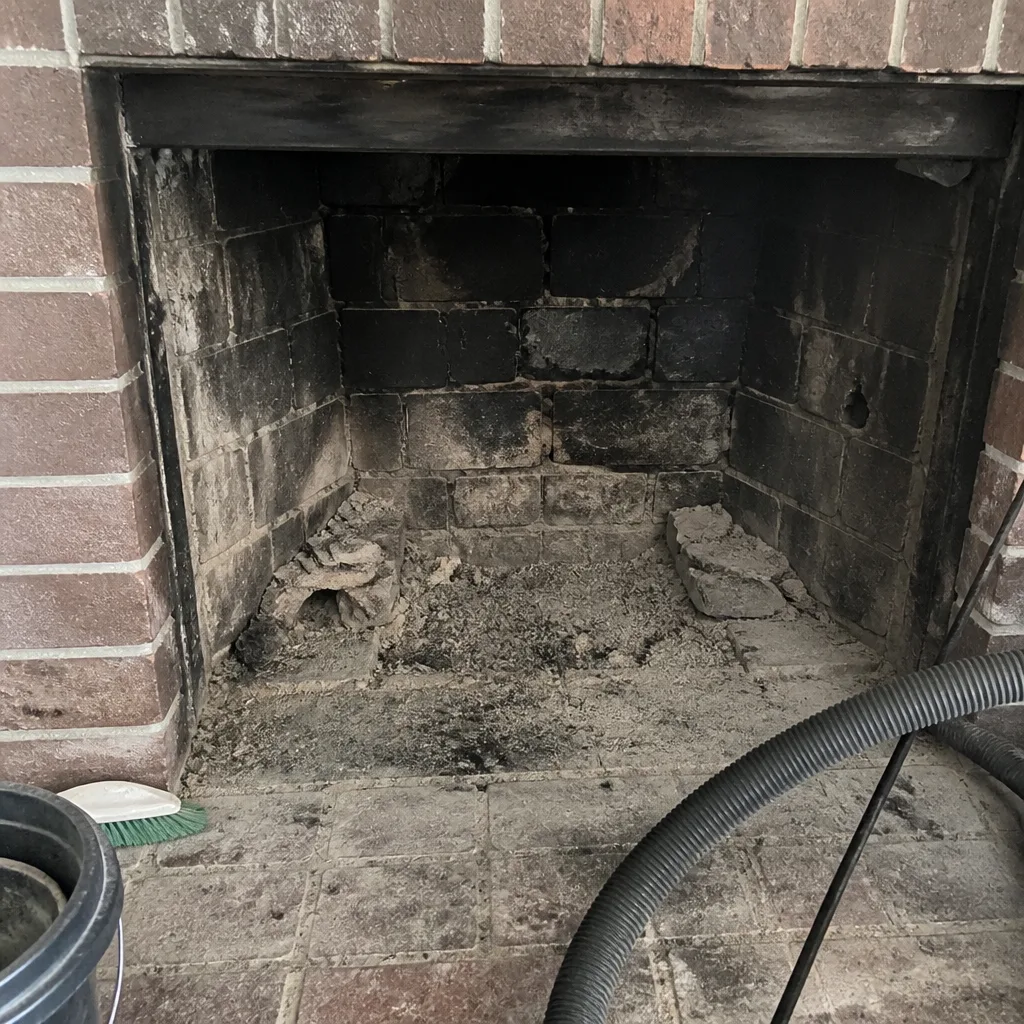 Before
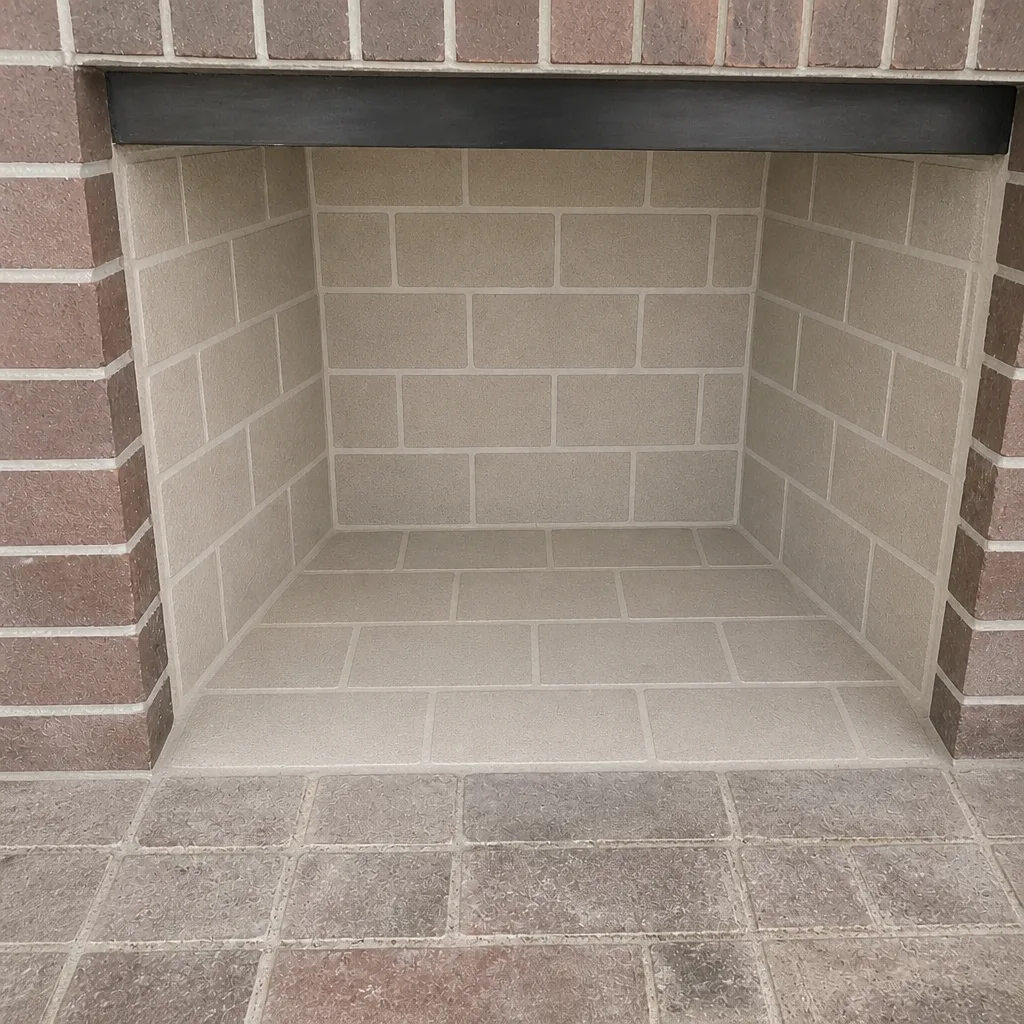 After
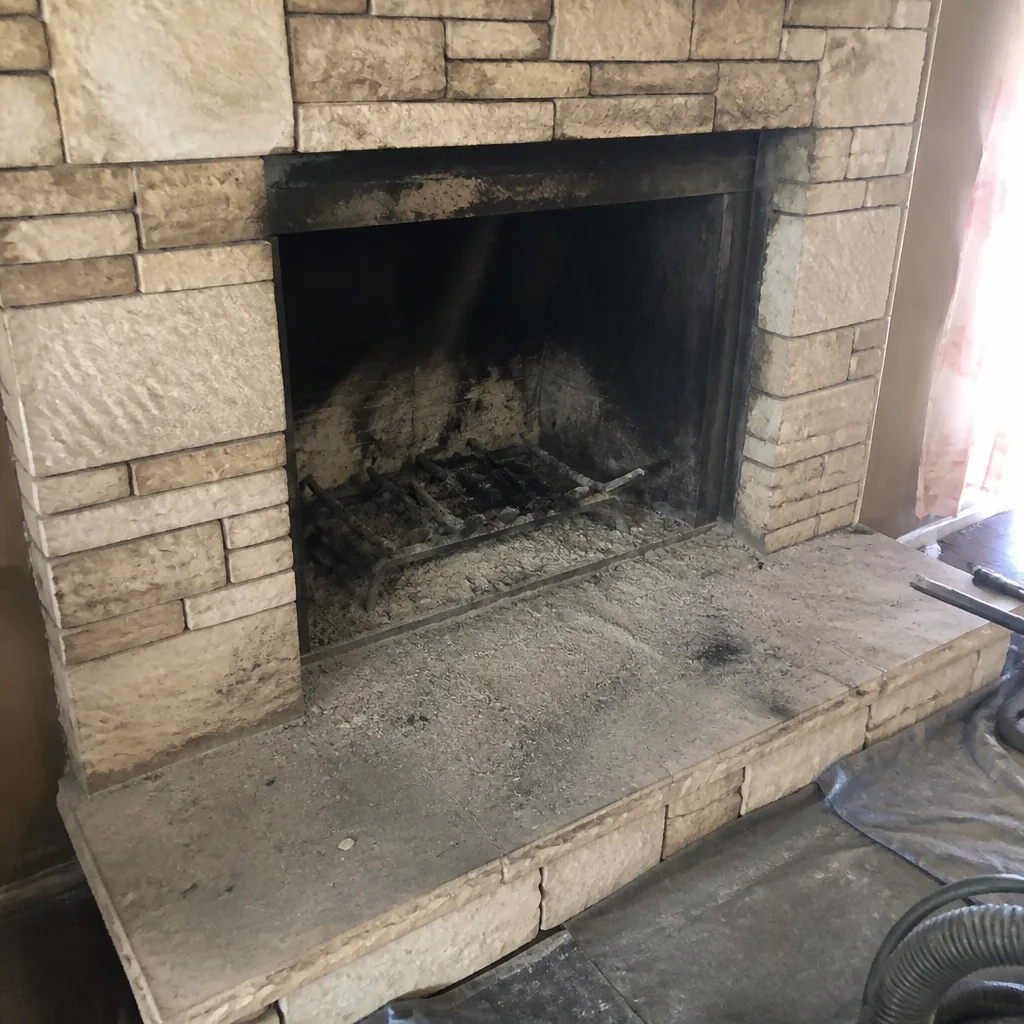 Before
 After
 Before
 After
When to Call a Professional
Call a professional after any of the following: you have had a chimney fire, you suspect the flue is cracked or damaged, your damper no longer operates correctly, you smell smoke or combustion fumes inside the house when the fireplace is not in use, or you cannot remember when the chimney was last swept. Also call if your CO detector has activated and the fire department has cleared the scene without finding the source; the chimney is often the origin. Chimney Sweep Bellflower offers free estimates in Bellflower. Call (866) 632-0270. We answer 24/7. Fast dispatch from 7am to 7pm, Sunday through Friday.
Frequently Asked Questions
In Bellflower, a standard chimney sweep typically costs between $180 and $340 depending on the flue condition, chimney height, and accessibility. The written estimate sets the final price, and the estimate is free. Call (866) 632-0270 for an exact quote.
A chimney fire starts when creosote inside the flue reaches its ignition temperature, usually during a hot fire after a period of creosote accumulation. The fire feeds on the creosote itself, not the wood in the firebox, which is why the fire can continue even after the firebox fire is out. That is why shutdown means closing the damper, not just removing the wood.
No. After any flue fire, the chimney must be inspected with a Level 2 internal camera scan before the fireplace is used again. Even a fire that appears minor can crack clay tile liners, and cracked tile can allow heat and gases to reach the framing. Chimney Sweep Bellflower can complete that inspection in Bellflower. Call (866) 632-0270 to schedule.
The standard recommendation is once per year, or every cord of wood burned, whichever comes first. In Bellflower, the shorter mild burn season sometimes leads homeowners to believe they can stretch the interval. Creosote accumulation depends on fire temperature and wood quality more than the number of months the chimney is used, and intermittent low-temperature fires are actually efficient creosote producers.
Place one within 10 to 15 feet of the fireplace, mounted high, and a second at the top of the stairwell or in the hallway leading to bedrooms. In an open-plan Bellflower home, carbon monoxide travels along the ceiling plane and into sleeping areas, so the standard advice of a detector outside each bedroom is the floor, not the ceiling. Call (866) 632-0270 if you want a sweep team that can also walk through your detector placement during the visit.
HeatShield is a ceramic flue resurfacing system used to restore damaged flue liners when cracks or gaps are found. After a chimney fire, a camera inspection may show damage that can be repaired with HeatShield rather than requiring a full rebuild. Bellflower homeowners working with Chimney Sweep Bellflower have access to HeatShield and DuraFlex liner systems as repair options when the inspection shows they are needed.
The Bottom Line
Chimney fire preparedness is a sequence of small, specific habits, not a single expensive purchase. Put the CO detectors in the right places. Know your damper by feel. Rehearse the shutdown steps. Keep the chimney swept annually, and treat any flue fire, however small it seems, as a structural event requiring a Level 2 inspection before the next use. Bellflower’s mild winters and the fireplaces in our older homes do not reduce the risk. They change the risk profile in ways that make regular maintenance and early detection more important. No one plans to have a chimney fire. The point is to plan for one anyway. Bellflower homes deserve that level of preparation, and it starts with a sweep.
Written by the team at Chimney Sweep Bellflower, serving Bellflower since 2017.